
Social Science and Humanities
Interactive & Hands-On Activities
Interactive and hands-on activities transform passive learning into experiential learning. They engage participants physically and mentally, making concepts memorable. Whether you're planning for a classroom, a home environment, or a professional workshop, concrete, tactile experiences yield the highest engagement.
For Workshops & Professionals
Talk to the Hand: An opening reflective activity where participants hold up one hand and assign a specific group or project feedback to each finger (e.g., thumb = what you like, middle finger = current frustrations).
Concept Mapping: Provide teams with index cards, sticky notes, and whiteboards. Have them physically group ideas and draw connectors to show complex relationships.
The "Yes/No" Tag: Tape a key vocabulary or concept on each person's back. They must mingle and ask peers "yes or no" questions to guess the term on themselves.
Social Facilitation
The Science of Canine Social Facilitation.
The "Social Catalyst" Effect: Dogs act as natural social lubricants. Studies highlight that simply being near a dog increases the likelihood of strangers smiling, engaging in conversation, and feeling a greater sense of community belonging.
Nervous System Regulation: The presence of a calm, ventral-vagal (relaxed) dog promotes co-regulation. Clients mirroring this calm energy can experience lower heart rates, decreased stress, and an increased capacity to process emotions.
Motivational Engagement: For individuals with neurodevelopmental disorders, dementia, or complex trauma, interacting with a dog increases treatment adherence. Clients are more motivated to complete daily physical and cognitive tasks when an animal is integrated into the activity.


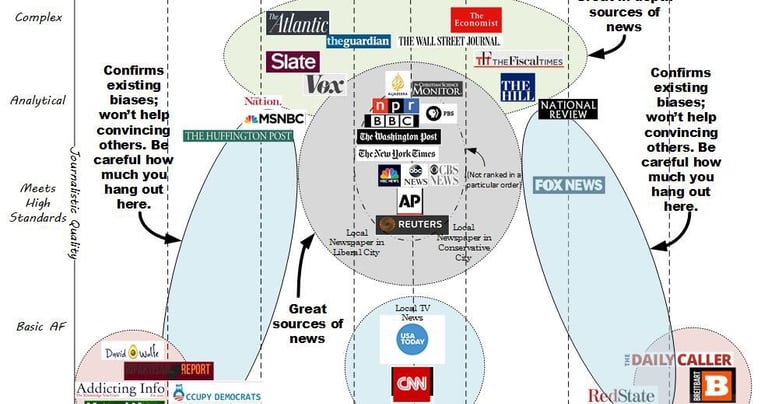
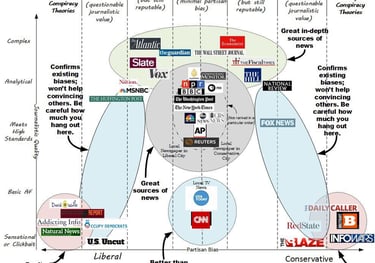
Media Bias Comparison
Media bias is when a news outlet’s choices about what to cover, whom to quote, and how to phrase a story shape the audience’s view in a particular direction. A useful comparison is that bias can come from what is selected, how much attention it gets, and how it is framed.
Main types
Selection bias. A newsroom highlights some topics or events and ignores others, so the audience gets an uneven picture.
Source bias. One side is quoted more often, or the outlet relies on sources that support one viewpoint.
Placement bias. Important stories are placed prominently, while others are buried lower on the page or later in a broadcast.mccneb.
Labeling bias. One side gets more loaded labels, such as “far-right” or “radical,” while the other is described in milder terms.
Word choice or tone bias. Emotionally charged language pushes readers toward a reaction rather than neutral understanding
Simple examples
Omission. An article about a policy change reports only supporters and leaves out critics.mcgill-toolen+1
Source selection. A story on a protest quotes mostly one political camp, making that side seem dominant.mccneb.libguides+1
Placement. A major corruption allegation against one party appears on page one, while a similar allegation against another party is hidden deep inside the paper.mcgill-toolen
Tone. Calling a tax plan “job-killing” instead of “costly” changes the emotional framing of the same policy.mccneb.libguides
Image choice. Using an unflattering photo of one politician and a flattering one of another can shape perception even if the text is similar
A simple illustration: if one outlet writes, “The protest turned violent after police intervention,” and another writes, “Police restored order after a protest escalated,” both describe the same event but frame responsibility differently.
Inquiry-Based Artifact Investigation
Seeing students as in-process and encouraging them to voice key points from their learning becomes pivotal for teacher candidates (TCs). The risk of expanding thinking with original ideas and building skills without relying on didactic scripted curricula, becomes a possibility for the TCs. As they grow in their pedagogical awareness, in doing social studies teaching and learning, they begin to recognize
the value of fostering agency and change within a social studies frame—both for themselves and their students. They come to understand that their own experiences and community contexts matter, and that they play a crucial role in empowering their students' voices and engagement in the classroom.
Integrating artifacts, such as historical photographs and primary sources, further enhances instructional strategies. A hands-on, inquiry-based approach to artifact study:
● Encourages students to ask meaningful questions, making social studies more engaging and relevant.
● Strengthens educators’ abilities to address and discuss controversial and sensitive topics in the classroom, fostering inclusivity and respect.
● Equips educators with effective tools and strategies, empowering them to confidently engage students in meaningful social studies learning by encouraging critical questioning and analysis.
● Builds academic language and multiple skills (e.g., constructing argument and analyzing subtext), inviting students to transfer classroom learning to other contexts across curriculum and the real world.
Source: Benchik-Osborne, Jacquelyn R. and McDonough, Susan () "Artifact Investigation as an Access Point to Doing Social Studies," The Councilor: A National Journal of the Social Studies: Vol. 88: No. 1, Article 1. Available at: https://thekeep.eiu.edu/the_councilor/vol88/iss1/1